Over the years, I've become increasingly curious about the things I believe to be true. I'm not talking about the obvious facts of life, but those quieter truths we carry around with us about ourselves, other people and the way the world works. Some have been with us for so long that we no longer think to question them.
Every now and again, I find myself asking a very simple question: Is that actually true?
It sounds such an easy question, yet when we begin to explore it, we can discover that something we've believed for many years is simply a story we've carried for so long that we've stopped noticing it is a story.
I've been smiling to myself recently because I realised I'd done exactly this.
If someone offered me clams, oysters, mussels or whelks, I would almost certainly reply, “No thank you, I don't like seafood.” I've said it for years with complete confidence. It was simply something I knew about myself, except when I stopped to think about it, I realised I didn't really know it at all.
As a little girl, I remember standing in the fish market in Birmingham while my mum happily tucked into a pot of whelks with one of those tiny wooden forks. I can still remember the smell of the market. To my young mind it was overwhelming, and watching these slimy little snail-like creatures disappear into her mouth was enough for me to decide that seafood looked absolutely disgusting.
Looking back now, there is something rather amusing about the whole thing because I hadn't actually tasted any of it. I'd had an experience, interpreted that experience through the eyes of a little girl and reached what seemed at the time to be a perfectly reasonable conclusion: I don't like seafood.
Then I carried that conclusion with me for decades.
It makes me wonder how often we do something similar with the more important parts of our lives.
As children, we are constantly trying to make sense of the world around us. We observe, listen and interpret events with whatever understanding we have at the time. Perhaps we decide we're not very clever, we're shy, we're not creative, we're no good at sport, or we're simply not the sort of person who does certain things.
Sometimes those conclusions come from our own experiences and sometimes they begin with something another person says about us. There are probably others whose beginnings we could never trace, because they've simply been with us for so long.
What interests me is what can happen once a belief has been around for a while. We stop thinking, I don't think I'm very good at that, and somewhere along the way it becomes, I'm not very good at that. What began as a conclusion, perhaps reached many years ago and with very little evidence, has quietly become something we experience as fact.
Once we've decided something is true, it makes sense that we begin to live around it. We make choices that fit it and notice experiences that seem to confirm it. We may even avoid the very situations that could allow us to discover something different, so without realising it, we can become rather good at proving ourselves right.
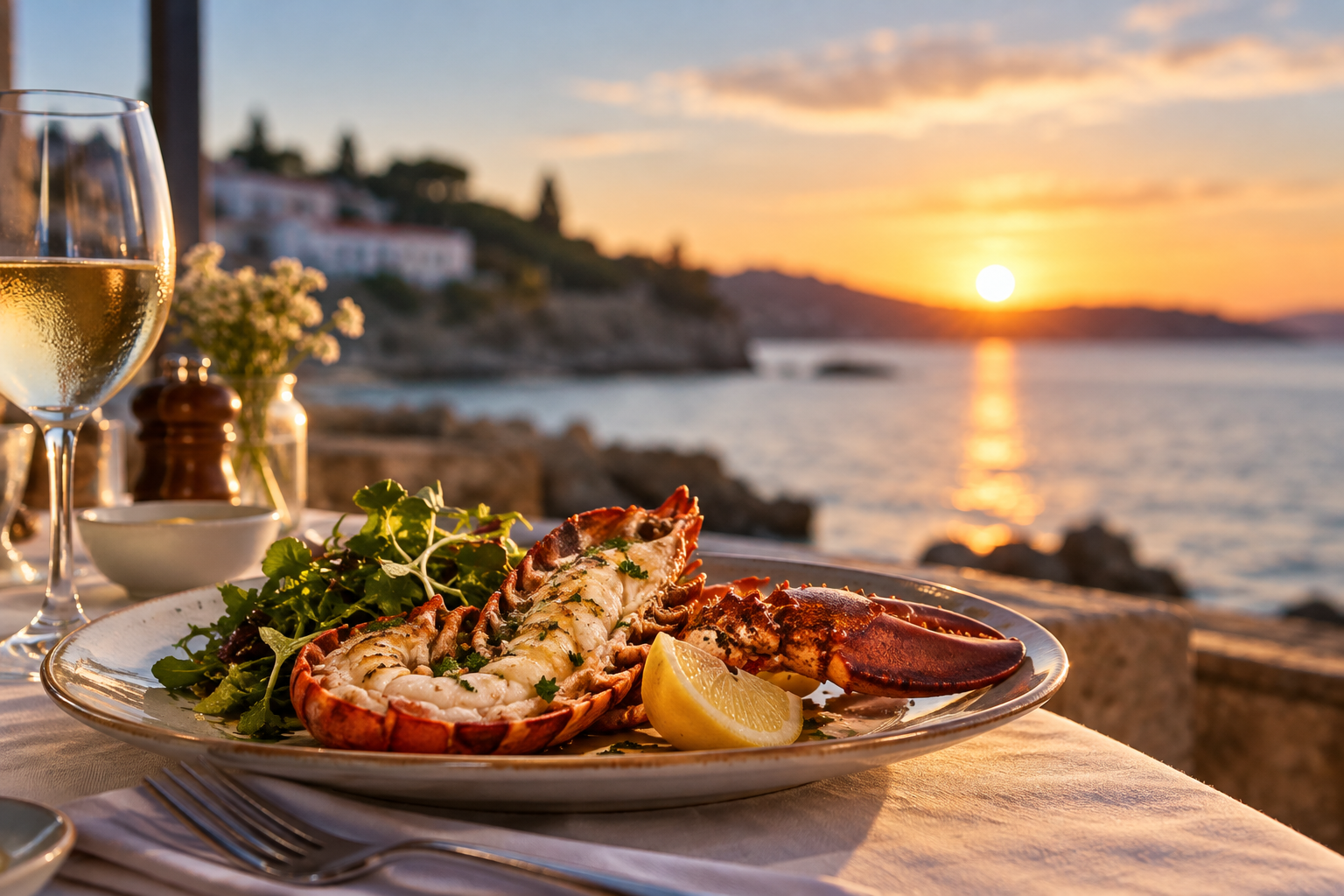
A little while ago, while celebrating a birthday, I ordered lobster as a starter. I have absolutely no idea what prompted me to choose it, but to my surprise it was delicious.
I couldn't help laughing because I'd spent decades confidently saying that I didn't like seafood when, in reality, I'd never really given much of it a chance. Of course, discovering I like lobster isn't going to transform my life, and I'm still not rushing out to buy a pot of whelks, but the experience stayed with me because it made me wonder about some of the other things I know.
How many have I actually experienced for myself? How many belong to an earlier version of me, or began as somebody else's opinion? And perhaps most interestingly, how many have never been tested because believing them has prevented me from having the very experience that might challenge them?
I find there is something quite freeing about allowing ourselves not to know. We don't have to replace one certainty with another or decide that everything we've believed until now was wrong. Perhaps we can simply become a little more curious about the difference between this is true and this is what I currently believe to be true.
That difference may seem quite small, but it leaves room for something else to happen. It leaves room for us to have a new experience without needing it to fit what we've already decided about ourselves.
These days, when I hear myself making a particularly certain statement about who I am, what I can do, what somebody else is like or how something will turn out, I try to notice. I don't immediately assume that I'm wrong, because sometimes what I believe will turn out to be perfectly accurate.
But every now and again, it's worth becoming curious enough to ask myself the question again.
Is it really true?
After all, I spent decades believing I didn't like seafood.
It turns out I rather like lobster.