I've become increasingly curious about how much of what we do each day is the result of a conscious choice and how much happens simply because it's what we've always done. We tend to think of ourselves as making decisions all the time, and of course we are, but I wonder how often we stop to consider what is actually influencing those decisions.
From the moment we wake up, there are choices to be made. What shall I wear? What shall I eat? How will I spend my day? Some of these decisions are so familiar that we barely notice making them, and perhaps that's just as well because it would be rather exhausting to consciously deliberate over every little thing. But what interests me are the choices that appear to be ours, yet may be influenced by beliefs, expectations and habits that we've never really questioned.
We might agree to something because we don't want to disappoint somebody, continue doing something because we've always done it, or avoid an opportunity because we've already decided we're not the sort of person who would enjoy it. Sometimes we may even find ourselves saying, “I didn't have a choice,” when perhaps what we mean is that none of the available options felt particularly comfortable.
I've certainly recognised this in my own life, particularly as I've become more aware of the expectations I place upon myself and the assumptions I make about what other people might want from me. For many years, I thought being responsible meant making sure everything was organised, everyone was considered and things ran as smoothly as possible. I became very good at anticipating what needed doing, often without anyone asking me to do it. At the time, I wouldn't necessarily have described these things as choices. They were simply what I did.
I can see this in something as ordinary as visiting family. When my brothers had children, I assumed it would be easier for my husband and me to travel to see them rather than expecting them to come to us. It seemed a perfectly sensible and considerate thing to do, so that's what we did. Over time, it became the familiar arrangement. We visited them, and they rarely visited us. Nobody had necessarily asked for things to be that way, but through my own assumptions and repeated choices, I'd helped establish a pattern that eventually became an expectation.
Occasionally, I would find myself wondering why nobody came to visit us, without immediately recognising the part I'd played in creating that situation. I find that rather interesting now, because I had made a choice based upon what I believed would make life easier for other people, but I hadn't actually explored whether my assumption was true. And because I continued making the same choice, it gradually stopped feeling like a choice at all.
That doesn't mean my original decision was wrong. It was made with the best of intentions. What changed was my awareness that I could approach things differently if I wanted to, and I think there's something rather freeing about recognising that we can question the familiar patterns of our lives without needing to judge ourselves for having lived within them.
But sometimes the choices we face are much bigger, and recognising that something needs to change doesn't necessarily make the decision any easier.
After spending many years working in financial services, I wanted to create a very different working environment for myself. I wanted to be outdoors, meet people and enjoy the satisfaction of helping them with something practical. So I began building a lawncare business, taking on a Greensleeves franchise in South Cheshire.
I built the business from scratch, and over almost six years it grew to the point where there were three of us working in it, including my husband and another employee. Initially, it offered much of what I'd been looking for. I enjoyed meeting customers, spending time outdoors and helping people look after their lawns, particularly dealing with weeds and moss. It was a very different experience from the corporate environment I'd left behind, and I learned an enormous amount about running a business.
But as the business became busier, something rather familiar began to happen. There was more organising to do, more ordering, marketing, invoicing and administration. Gradually, I found myself spending more and more time back in the office, doing the very things I'd wanted to move away from. And because I was good at those things, it was remarkably easy to slip back into that familiar role.
I hadn't set out to recreate my previous working environment, yet in many ways that was exactly what had happened. The business had grown, but the experience of running it was becoming increasingly different from the one I'd originally imagined. There was something else changing within me too. I was becoming increasingly uncomfortable with the use of chemicals on people's lawns. What had once felt like a perfectly acceptable part of the work no longer sat comfortably with me.
So I found myself in a rather difficult position. I had spent almost six years building something from nothing, investing an enormous amount of time, effort and energy into making it successful. There were also two other people working in the business whose livelihoods were connected to the decisions I made. I couldn't simply ignore those responsibilities, and I certainly didn't want to make a decision without considering how it might affect them.
Yet the longer I continued, the more uncomfortable I became. I began to dread the tediousness of my working days, and the feelings within my body seemed to grow louder as time went on. I knew something wasn't right for me anymore, but knowing that and being ready to do something about it were two very different things.
My mind could produce all sorts of reasons why I should continue. I'd invested so much. The business was established. Other people depended upon it. And perhaps, if I changed a few things, I might begin to enjoy it again. But beneath all those thoughts was the growing recognition that I no longer wanted to be doing what I was doing.
Then one night, I had a dream in which I saw myself folding up a lawn. It's such a simple image, and I can't tell you why that particular dream made such a difference, but when I woke the following morning, I had an unmistakable sense that it was time. The decision I'd been struggling with suddenly felt clear.
That didn't mean the practical difficulties disappeared. I still had to work through the implications of what I'd chosen, and there were some difficult steps to take. Eventually, I divided the South Cheshire territory I'd developed and sold the two areas to different Greensleeves franchisees.
Looking back, I'm struck by how long I'd spent trying to work out what to do, even though something within me had been signalling for quite some time that I was no longer happy with the direction my working life had taken. I don't know whether the dream brought me clarity or whether I'd finally reached a point where I was ready to acknowledge what I'd been feeling all along. Perhaps it doesn't matter. What I do know is that the clarity I experienced that morning allowed me to begin taking the steps I'd previously found so difficult.
And I wouldn't describe those six years as a mistake. Quite the opposite, in fact. Building that business taught me things I could never have learned simply by remaining in the corporate world. I discovered what it meant to start something from nothing, develop relationships with customers, employ people and take responsibility for all the different aspects of running a business. Those experiences proved invaluable as I continued developing my own work in a very different direction.
Perhaps just as importantly, the experience helped me become clearer about what I actually wanted, and it showed me how easily we can slip back into familiar habits, particularly when we're good at them. Sometimes we make a conscious decision to change our circumstances, believing that a different environment will create a different experience. Yet we take ourselves, along with all our familiar patterns and ways of responding, into that new environment. Unless we begin to notice those patterns, we may find ourselves recreating something remarkably similar to what we thought we'd left behind.
Of course, becoming aware of our choices doesn't necessarily mean we immediately know what we want to do instead. Sometimes, when we're faced with a decision, our minds become incredibly busy. We start considering all the possibilities, imagining what might happen, remembering what happened last time and wondering how other people will respond. We may ask several people for their opinions, only to find ourselves more confused than we were before.
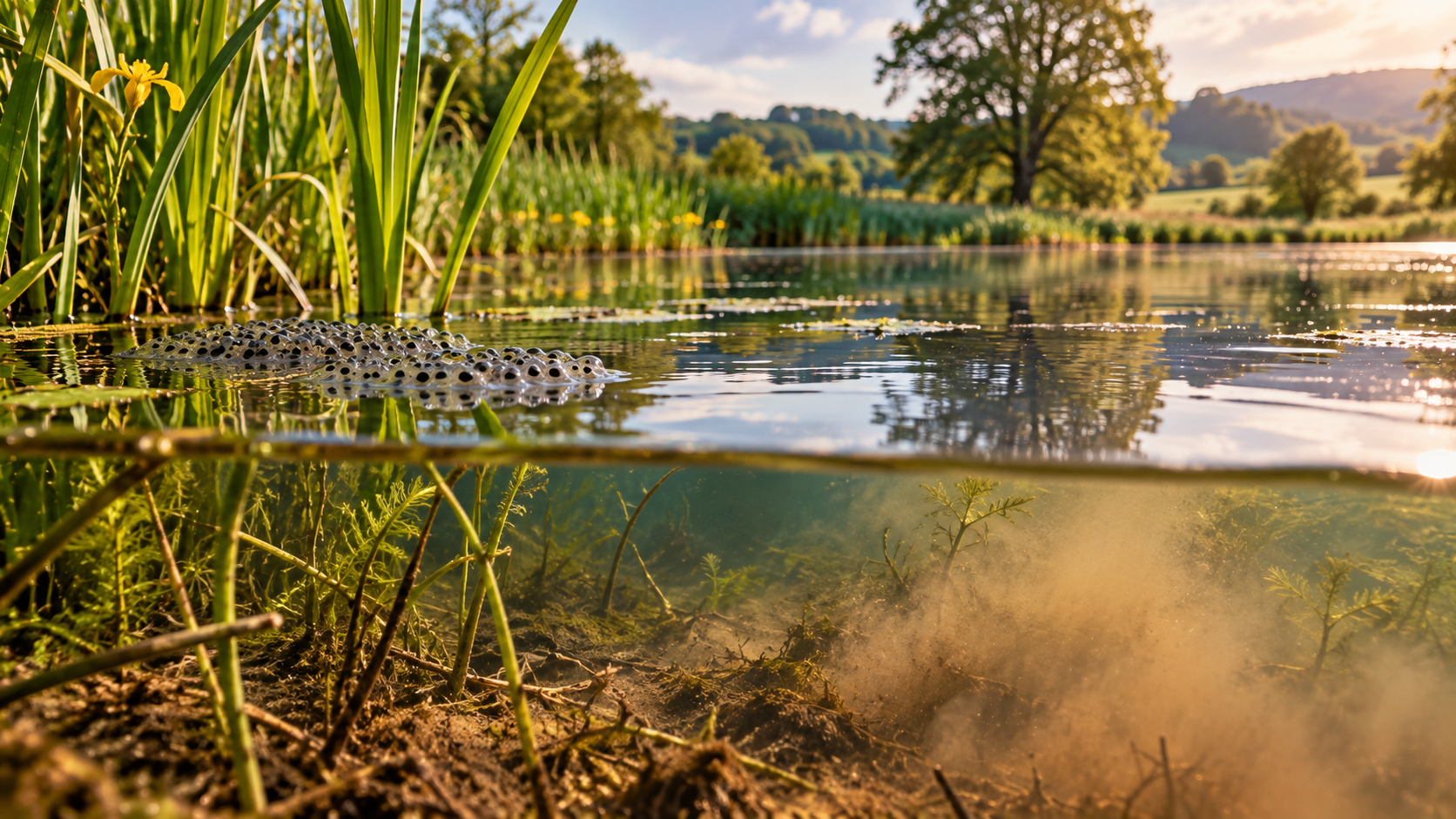
I often think of a muddy pond when I notice this happening. Imagine standing beside a pond where the water has become cloudy because the mud at the bottom has been disturbed. We might be desperate to see what's beneath the surface, so we keep stirring the water, hoping that somehow we'll find the clarity we're looking for. Yet every time we disturb it, the water becomes cloudy again. If we allow the pond to become still, the mud gradually settles and we begin to see more clearly.
I've found that something similar can happen when I give myself permission to stop trying to work everything out. Rather than searching for another answer or running through the same possibilities repeatedly, I can allow a little space for things to settle. Sometimes that means sitting quietly, going for a walk or simply getting on with something else without continuing the conversation in my head. It isn't necessarily about finding the perfect answer through meditation or waiting for some extraordinary moment of insight. Often it's simply about noticing what becomes apparent when I'm no longer trying so hard to make something happen.
And sometimes, even when the noise has settled, I still don't know what to choose. I think this is another part of choice that we don't always acknowledge. We can become so concerned about making the right decision that we forget we are making it with the understanding and information available to us at that particular moment. We cannot know every consequence in advance, however much we might like to. We can consider the possibilities, listen to our experience and pay attention to what feels appropriate, but eventually there comes a point when we either make a choice or recognise that, for now, we are choosing not to decide.
I've begun to see that uncertainty doesn't necessarily mean something is wrong. It may simply mean that I haven't had the experience yet that would allow me to know. There have been occasions when I've chosen something with enthusiasm, only to discover that it wasn't quite what I expected. In the past, I might have been tempted to regard that as a mistake, particularly if I'd invested time, money or energy in the decision. These days, I'm more interested in what the experience has shown me.
Sometimes we discover what we enjoy, what suits us or what we'd like to explore further. At other times, we discover what we don't enjoy, what no longer feels appropriate or what we wouldn't choose again. Both experiences give us information that we didn't have before. When I look back, I can see that some of the decisions that appeared not to work out as planned were the very ones that helped me understand myself more clearly.
Of course, some choices have consequences that need careful consideration, and I wouldn't suggest treating every decision lightly. There are responsibilities, commitments and other people who may be affected by what we do. But even when we take all of that into account, we are still making our decisions from where we stand today, not from a future in which we already know how everything will unfold.
I also find it interesting how often we continue defending a choice long after we've begun to recognise that something has changed. Perhaps we feel we should stick with it because we've already invested so much, or because other people know what we decided and we don't want to appear inconsistent. Yet having the freedom to choose must surely include the freedom to reconsider.
We may discover that something which suited us beautifully ten years ago no longer feels appropriate. Our circumstances change, our understanding develops and sometimes our interests take us in entirely different directions. That doesn't necessarily mean our earlier choice was wrong. It may have been exactly what we wanted or needed at the time, and perhaps we can allow ourselves to recognise the value of that experience without feeling obliged to continue repeating it.
These days, when I find myself feeling that I have no choice, I sometimes become curious about what is sitting beneath that feeling. Am I genuinely without options, or have I already ruled some out because they might disappoint someone, challenge an old belief or take me somewhere unfamiliar? Sometimes there are very real limitations, and acknowledging them matters. But at other times, I discover that the boundaries around my choices are ones I've quietly created myself.
I don't think living with greater awareness means that every decision suddenly becomes easy. There will still be uncertainty, conflicting feelings and occasions when we wish we knew how things would turn out. But perhaps we can begin to recognise the difference between making a choice because it genuinely feels appropriate and making one because we've never considered doing anything else.
And perhaps that is where something begins to change. Not necessarily in the choices we make, but in recognising that we are making them, and that as our understanding develops, we have the opportunity to choose again.