I've been wondering recently when being busy became such an important part of our lives. We seem to have developed a rather interesting relationship with doing things, almost as though the amount we accomplish has become a measure of how well we're living.
Think about how often we ask someone what they've been doing, or how their day has been, and the answer involves a description of everything they've managed to fit in. We talk about productive days, busy weeks and all the things we still need to get done. And when someone asks what we've been doing and the answer is “not very much”, there's sometimes an almost apologetic quality to the response, as though we ought to have something more impressive to report.
I've noticed this in myself too, although it took a significant change in my circumstances before I really began to recognise just how deeply that relationship with doing had become part of me.
For much of my working life, doing was simply what I did. I spent 37 years in financial services, where there were always things to organise, problems to resolve, people to support and responsibilities to manage. Being capable, efficient and dependable were qualities that served me well, and I became very comfortable in an environment where there was always something that needed my attention.
It wasn't until I left the corporate world that I began to recognise how accustomed I'd become to that way of living. I had chosen to work for myself because I wanted a different experience of life, with more freedom to decide how I spent my time. Yet when I finally had that freedom, I discovered that I wasn't particularly comfortable with it.
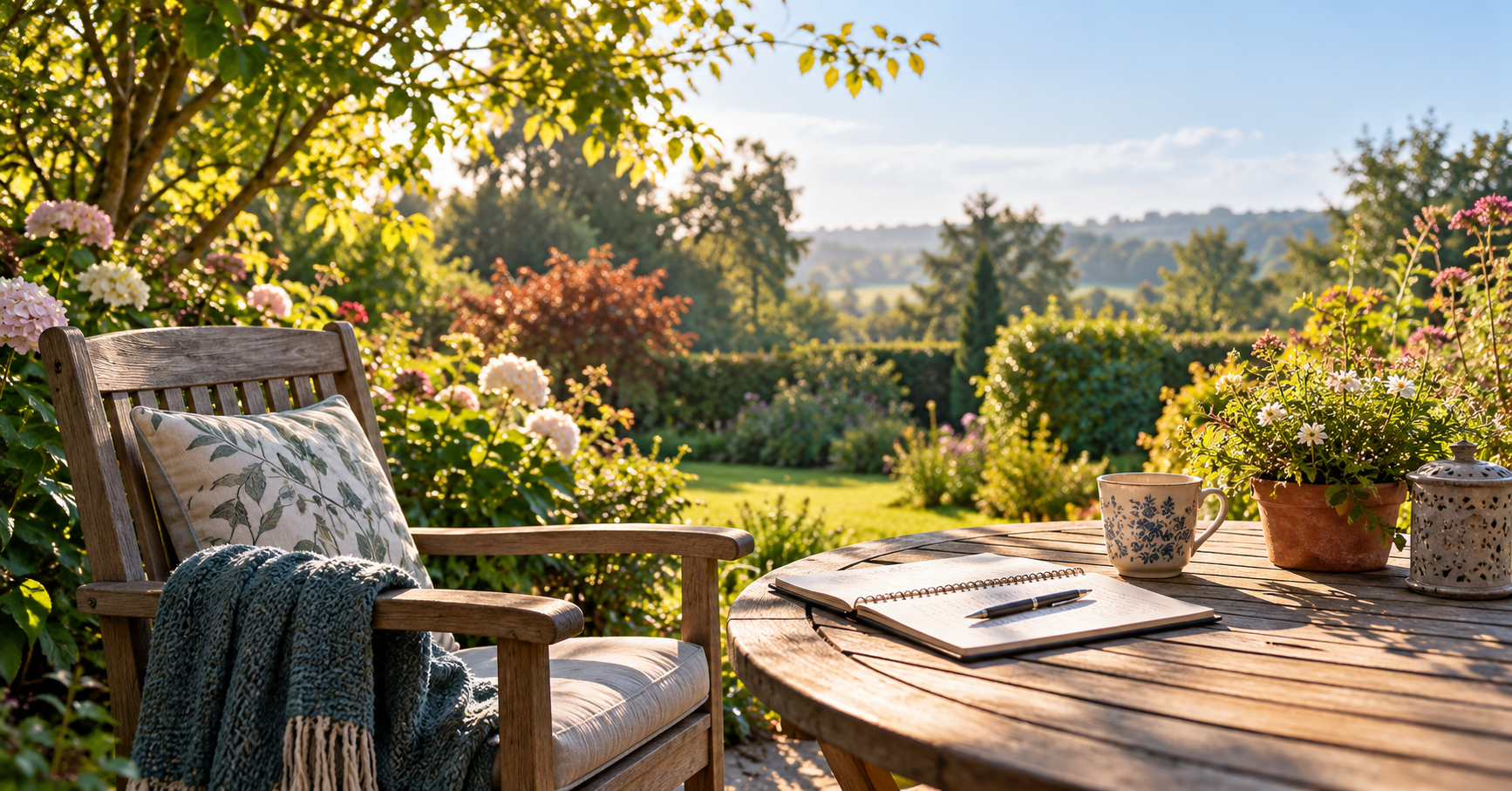
I remember how difficult I found it to break the routine of sitting at my computer throughout the working day. If the weather was beautiful and I decided to spend the morning in the garden, or perhaps go out somewhere simply because I could, there was an almost immediate thought: I should be working.
And with that thought came guilt. There was no manager expecting me to be at my desk, and nobody was telling me that I shouldn't be enjoying myself. In fact, one of the reasons I'd chosen to work for myself was to have greater freedom over how I spent my time. Yet when I actually had that freedom, I found it surprisingly difficult to enjoy it.
Even in the early days of building my new business, when I might only have two or three customers, I was remarkably good at finding things to do. There was only so much work that genuinely needed my attention, but I could always create another task, organise something or find a reason to sit at the computer. Looking back, I can see that being busy made me feel comfortable, whereas choosing to do something purely because I wanted to brought up that familiar thought that I should be working.
I find that rather fascinating now. I had changed my circumstances, but I was still carrying the expectations and habits I'd developed over many years. I had given myself permission to leave the corporate world, but I hadn't yet given myself permission to stop behaving as though I was still in it.
It makes me wonder how many of the things we do each day are genuinely necessary, how many we choose because we enjoy them, and how many are simply familiar ways of behaving that we've never thought to question.
Of course, there is nothing wrong with being busy. I enjoy creating things, learning, meeting people and getting involved in projects. There can be enormous satisfaction in accomplishing something, particularly when we've put time and energy into it. But I've become increasingly curious about the difference between doing something because I want to and doing it because I feel I ought to.
I sometimes think back to being a child and how easily I could spend time simply gazing out of a window. There didn't have to be anything particularly interesting happening outside. I might watch the movement of the trees, notice people passing or allow my attention to wander without feeling that I needed to arrive at a conclusion. I don't remember thinking that I ought to be making better use of that time. I was simply there, enjoying whatever caught my attention.
Somewhere along the way, that ease with simply being seems to become less familiar to many of us. We begin to organise our days around what needs to be accomplished, and understandably so, because life brings responsibilities. There are jobs to do, people who depend on us and practical things that genuinely need our attention. Yet I wonder whether, alongside those responsibilities, we also develop an expectation that our time should always have a purpose, preferably one that produces something we can point to afterwards.
Even the activities we choose to help us relax can become another form of doing.
Take meditation, for example. We might decide to spend some time sitting quietly, perhaps because we've heard how beneficial it can be, and before long we find ourselves wondering whether we're doing it correctly. Should our minds be quieter? Should we be feeling more peaceful? Are we making progress? Something that began as an opportunity to be still can gradually become another activity in which we have expectations of ourselves.
I've certainly recognised that tendency during my own exploration of Reiki and personal development. I genuinely enjoy learning and experimenting with different practices, but I've also become aware of how easily curiosity can turn into an expectation that I should be getting somewhere. There is always another book to read, another course to attend or another idea to explore, and sometimes it's worth noticing what is encouraging us to take that next step.
Are we exploring because something genuinely interests us, or is there a belief somewhere that we need to learn more, understand more or become something different from who we are now?
I don't think there's necessarily a right or wrong answer to that question. What interests me is becoming aware of the difference, because the experience of learning from curiosity can feel very different from learning because we believe something is missing.
And perhaps the same is true of being still.
I remember the experience of holding a baby and how naturally my attention could settle into that moment. There was no particular task to accomplish, no need to improve the experience or work out what should happen next. I was simply aware of the little person in my arms, their breathing, their movements and the quiet experience of being together.
Of course, we could say I was doing something. I was holding a baby. But there was no sense of needing to achieve anything beyond what was already happening, and I think that is an important distinction.
We probably all have moments like this, although we may not recognise them as anything unusual. Perhaps we're sitting in the garden watching a bird, listening to music that completely absorbs us or enjoying a conversation in which we aren't thinking about what we need to say next. We aren't trying to get anywhere or accomplish something. Our attention is simply with the experience we're having.
What I find interesting is that when we deliberately try to recreate those moments, we can sometimes turn being into another thing we need to do. We tell ourselves that we should meditate more often, spend twenty minutes being still or practise being present throughout the day. Before long, we've created another collection of expectations, and the very thing we hoped would help us step away from doing has become something else on our list.
I can smile at that now, because I recognise how easily I can do it myself.
Over time, I've become less concerned with whether a period of stillness feels peaceful and more interested in noticing what actually happens. Some days, sitting quietly feels comfortable and natural. On others, I might notice a stream of thoughts, tension somewhere in my body or a strong desire to get up and find something to do. Rather than deciding that one experience is better than another, I'm learning to be curious about what is there.
Perhaps being isn't really about achieving a particular state of calm or managing to stop thinking. Perhaps it is simply about becoming aware of our experience without immediately feeling that we need to change it.
And I wonder whether being and doing are really the opposites we sometimes imagine them to be.
After all, I can be sitting in a chair doing very little physically while my mind is incredibly busy, planning, remembering or rehearsing conversations. Equally, I can be thoroughly involved in an activity and feel completely present with it. When I'm working in the garden, for example, there are times when I'm so absorbed in what I'm doing that I'm not particularly concerned about how long it's taking or what I need to do afterwards. I'm simply enjoying the experience.
So perhaps the distinction isn't between activity and inactivity at all. Perhaps it has more to do with where our attention is and what we're telling ourselves about what we should be doing.
When I think back to those early days of self-employment, I can see that the guilt I experienced wasn't coming from the garden, the beautiful weather or the fact that I had decided to go out for the morning. It came with the thought that I should be working. The circumstances themselves were quite straightforward. I had some freedom in my day and could choose how to use it. Yet the meaning I attached to that choice created an entirely different experience.
I wonder how often that happens in other areas of our lives. We might have an afternoon with nothing particular planned, yet instead of enjoying the opportunity, we begin thinking about all the things we could be doing. Or perhaps we've completed everything that genuinely needs our attention, but still feel slightly uncomfortable sitting down with a cup of tea and simply watching the world go by.
We may even find ourselves justifying those moments to other people, explaining how busy we've been or how much we've already accomplished, as though enjoying some time without a particular purpose needs to be earned.
I think there's something worth exploring in that.
So much of our lives can become organised around the idea that once we've finished everything, we'll finally have time to relax and enjoy ourselves. Once the work is done, the house is sorted, the course is completed or the next problem is resolved, then perhaps we can simply be. But there is usually something else waiting for our attention, and if we're accustomed to creating tasks when there aren't enough already, we can keep ourselves occupied almost indefinitely.
I'm not suggesting that we abandon our responsibilities or stop making plans. There is a practical side to living, and I enjoy that too. What I'm beginning to recognise is that life isn't only happening when we're achieving something, and the moments between our activities aren't simply empty spaces waiting to be filled.
These days, I'm becoming more interested in noticing my relationship with doing. I still enjoy being active, creating things and learning, and I suspect I'll always have a curious mind that wants to explore something new. But I'm also more aware of that familiar inner conversation which suggests I ought to be doing something else, even when what I'm doing is exactly what I've chosen.
Sometimes I listen to it and recognise that there really is something that needs my attention. At other times, I notice that it's simply an old, familiar way of thinking, and I can choose whether I want to follow it.
Perhaps being and doing were never meant to compete with one another. We can enjoy the satisfaction of accomplishing things while also allowing ourselves moments when nothing needs to be accomplished. We can be fully involved in an activity without constantly thinking about what comes next, and we can spend a morning in the garden without needing to explain why that was a perfectly good use of our time.
I still find it interesting that I once worked so hard to create more freedom in my life, only to discover how difficult I found it to give myself permission to enjoy that freedom.
And perhaps that is a question worth sitting with. When we look back over a day, rather than measuring it only by what we've managed to accomplish, what might we notice if we also became curious about how much of it we've actually experienced?